
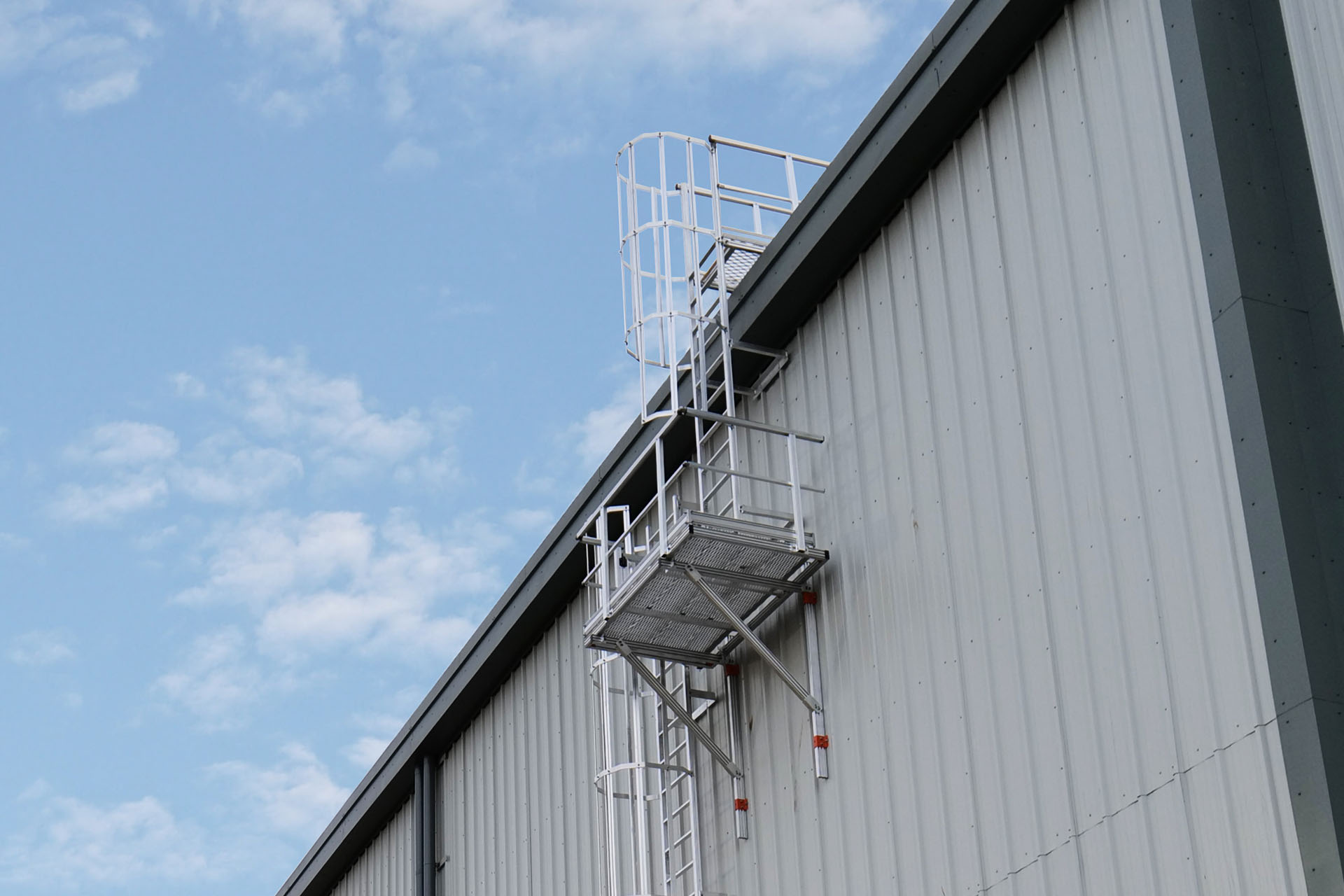
Fixed ladders are integral to efficient and safe operations in a number of domestic, industrial, and commercial settings. Right from houses and apartment buildings to warehouses and construction sites, such ladders allow the public and professionals to access internal and external high areas swiftly and safely. Top manufacturers offer fixed access ladders that are designed for maximum safety, comfort and support, and provide safe access to difficult-to-reach areas.
Introduction To Fixed Access Ladders
A fixed ladder is basically permanently attached to a structure. They are generally designed for frequent use, and provide a reliable and stable means of accessing elevated areas. Leading manufacturers use extremely durable materials like 6061-T6 aircraft-grade aluminum alloy to make high-quality fixed ladders. Such ladders are manufactured for extra safety and longer life, while meeting strict OSHA and ANSI requirements. Aluminum access ladders are virtually maintenance-free. They do not have to be repainted and have superior scratch resistance properties.
Here are two of the most common fixed access ladder designs:
- 90° Fixed Ladders: Such fixed ladders are designed for vertical, 90-degree climbing. As vertical climbing requires more effort from the upper body, 90° fixed ladders are engineered specifically to support the physical demands of straight-up ascent, and feature round rungs instead of flat rungs. Round rungs offer a more comfortable and secure handhold, allowing users to maintain a firm grip as they pull themselves upward. Their shape fits the hand naturally, reducing strain. Round rungs also provide better support for the feet, which usually pivot more when climbing vertically. Overall, round rungs facilitate improved balance and smoother movement. Rungs on 90° fixed ladders also tend to have a serrated surface for a no-slip grip and are secured to the side rails with cast aluminum connectors to ensure a permanent, no-twist installation.
- Fixed Angle Ladders: Ships and folding ladders use flat steps of diverse widths, each chosen for a particular angle. Flat steps provide superior support when climbing at an angle. Fixed-angle ladder steps typically have non-slip ridges on the top, and are affixed permanently to the side rails using 8 solid rivets per step. They come with flush or extended handrails, which are designed to fit the hands of the users. These handrails provide a comfortable grip and help users to steady their body while climbing. Fixed-angle ladders might also be equipped with heavy-duty mounting brackets.
Anatomy Of a Fixed Access Ladder
Fixed ladders comprise of two key parts, the rungs and the rails. The rungs refer to the horizontal bars you step on to climb to the top. The rails, on the other hand, are the vertical bars that keep the rungs parallel to each other. A fixed access ladder shall also have brackets. Brackets are used to attach the fixed ladder to a building. A fixed access ladder may also have a cage or well. A cage is a series of bars encircling the ladder, while a well is a walled circular structure surrounding the ladder. Both of these components provide extra protection to the climber while the ladder is in use.